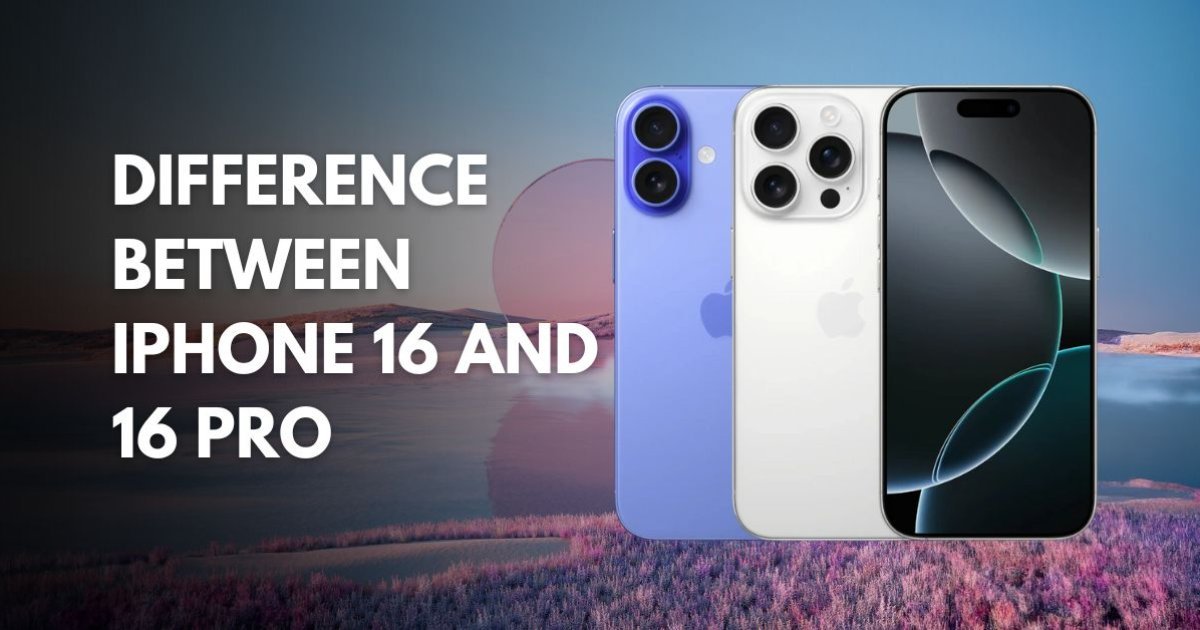
Difference Between iPhone 16 and 16 Pro
iPhone 16 vs iPhone 16 Pro: Which should you choose in 2026?
It is January 2026, and the iPhone 16 series has officially transitioned from the latest and greatest to the tried and true veterans of the Apple lineup. With the iPhone 17 now available, many buyers are looking at the 16 series as a high-value alternative.
At first glance, the iPhone 16 and iPhone 16 Pro look more alike than any generation before them. They both have the Action Button, they both have the Camera Control slider, and most importantly they both fully support Apple Intelligence.
However, after a year of real-world usage data, we’ve found that the "Pro" moniker carries weight in three specific areas: Fluidity, Materials, and Focal Lengths. If you are trying to decide which one is worth your investment today.
1. The Display: 60Hz vs. 120Hz (The Great Divide)
If there is one single reason to spend the extra money on the iPhone 16 Pro, it is the screen.
- iPhone 16: 6.1-inch Super Retina XDR (60Hz)
- iPhone 16 Pro: 6.3-inch ProMotion (120Hz)
In 2026, a 60Hz screen on a premium smartphone feels like an anomaly. While Apple’s animations are smooth, they cannot hide the physical limitation of the 16’s refresh rate. When you scroll through a long webpage or swipe between apps on the 16 Pro, the movement is instantaneous and "liquid."
Furthermore, the 16 Pro features an Always-On Display. In 2026, as we’ve grown accustomed to glancing at our phones for "Live Activities" (like the score of a game or the arrival time of a food delivery), the 16 Pro allows you to see this info without even touching the device. The base iPhone 16 requires a tap to wake, which feels remarkably old-fashioned by today's standards.
2. Design and Ergonomics: Aluminum vs. Titanium
The "feel" of these two phones is fundamentally different.
The iPhone 16 uses aerospace-grade aluminum and a color-infused back glass. It is noticeably lighter (170g), making it a favorite for hikers or anyone who hates phone fatigue in their wrist. The colors for the 16 (Ultramarine, Teal, and Pink) are vibrant and fun; they actually look like modern tech.
The iPhone 16 Pro is built with Grade 5 Titanium. It is heavier (199g), giving it a dense, expensive feel. The bezels on the Pro are also the thinnest Apple has ever produced. When you look at the 16 Pro, the screen seems to bleed right to the edge, whereas the standard 16 has a visible black border that looks slightly budget by comparison. Compare side-by-side
3. The "Pro" Camera System: Do You Need 5x Zoom?
Both phones share the same 48MP Fusion main camera, which is excellent. They both even have the Camera Control button on the side to adjust exposure and zoom.
However, the 16 Pro has two massive advantages:
- The Telephoto Lens: The Pro has a dedicated 5x Optical Zoom. If you are at a concert, a graduation, or a sporting event, the 16 Pro can get you "close to the action" with sharp, clear detail. The base 16 has to rely on digital cropping, which falls apart as soon as the sun goes down.
- 48MP Ultra Wide: The Pro’s ultra-wide lens was upgraded to 48MP, allowing for incredible Macro (close-up) photography. If you like taking photos of flowers, textures, or food, the 16 Pro is a professional-grade tool.
4. Processing Power: A18 vs. A18 Pro
Under the hood, both phones were designed for Apple Intelligence, but they have different engines.
The A18 Pro in the 16 Pro has an extra GPU core and a faster "Media Engine." In 2026, this matters for one specific group of people: Gamers. If you are playing AAA titles like Assassin’s Creed or Resident Evil, the Pro will maintain higher frame rates and run cooler for longer periods.
For the average user scrolling Instagram, checking email, and using Siri the standard A18 is more than enough. You won't notice a difference in speed during 99% of your day.
A Brief Tangential Thought
Have you noticed how the Camera Control button has changed our behavior? When it launched in 2024, people thought it was a gimmick. By 2026, it has become the standard way we interact with Visual Intelligence. Whether you're on the 16 or the Pro, being able to click a button and have your phone identify a plant or translate a menu is one of those magic moments that makes the 16 series feel special. (Rhetorical question: Why did it take us 16 years to get a dedicated camera shutter button?)
The Verdict: Which one is for you?
Buy the iPhone 16 if:
- You want the best value for your money. In 2026, a refurbished or discounted 16 is a steal.
- You love vibrant colors and a lightweight design.
- You aren't a power user who needs 5x zoom or 120Hz scrolling.
Buy the iPhone 16 Pro if:
- You spend a lot of time on your phone and want the smoothest display experience possible.
- You are a content creator or photographer who needs ProRAW and 5x zoom.
You want a phone that feels like a premium piece of jewelry rather than a piece of electronics.